

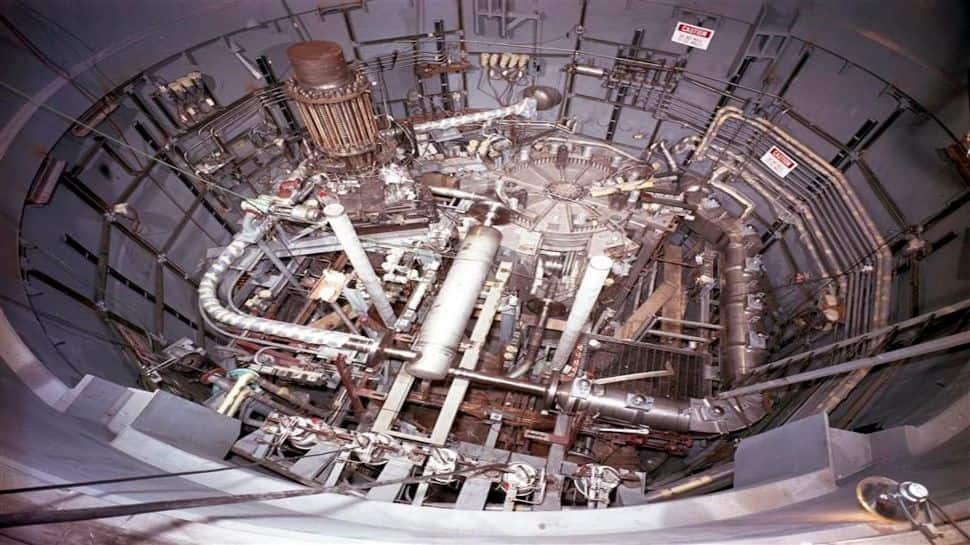
A significant development in nuclear power has occurred in China, with scientists successfully demonstrating thorium-to-uranium conversion in a molten salt reactor. This achievement revives a promising nuclear fuel cycle that the United States had pioneered and then shelved, opening doors to a potentially vast source of clean energy.
The Shanghai Institute of Applied Physics has confirmed the operational success of its two-megawatt Thorium Molten Salt Reactor (TMSR), proving thorium’s capability as a reliable and stable nuclear fuel. This technology is rooted in early American research from the 1960s, which explored the potential of molten salt reactors but was ultimately abandoned in favor of uranium-based systems, driven by Cold War imperatives.
Chinese scientists have reportedly delved into declassified US documents to reconstruct and advance this technology, positioning their nation as a leader in a field that has been dormant for decades. Work is already progressing on a larger, 10-megawatt reactor intended for commercial electricity generation.
The TMSR offers a distinct advantage by not requiring large volumes of water for cooling, a crucial benefit for regions with water scarcity. Thorium, the fuel source, is considerably more abundant than uranium and possesses lower radioactivity. Crucially, World Nuclear Association data indicates that thorium reactors produce significantly less hazardous, long-lived radioactive waste, presenting a more environmentally sound approach to nuclear energy. This technological leap underscores China’s pursuit of energy independence and its potential to redefine global energy strategies.