

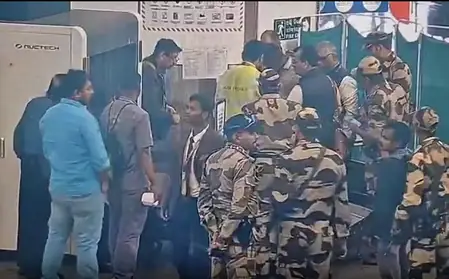
Vigilance pays off—literally—in life-saving measures at Bhubaneswar’s international airport. What began as a routine screening morning escalated dramatically when a passenger suffered sudden cardiac arrest right before boarding. CISF jawans, ever watchful, transformed into emergency responders in seconds flat.
The 48-year-old victim, en route to Delhi, exhibited classic signs: no pulse, no breathing. Trained personnel initiated high-quality CPR immediately, alternating 30 compressions with two rescue breaths. Fellow passengers formed a human cordon, while airport staff summoned the medical response vehicle.
Success came swiftly; color returned to the man’s face as his heart restarted just as paramedics arrived. Transported to KIMS Hospital, he’s listed stable with doctors optimistic about full recovery. ‘CPR within the golden hour is everything,’ emphasized the treating cardiologist.
CISF Odisha Sector Commander commended the team’s preparedness, rooted in their 72-hour emergency medical certification. This marks the third such intervention at the airport this year, prompting calls for expanded AED installations across terminals.
The incident resonates amid rising in-flight medical emergencies nationwide. Aviation experts advocate for uniformed staff CPR proficiency as standard. Families of the saved passenger visited the airport to personally thank the jawans, presenting traditional Odia shawls in appreciation.
In an era of heightened air travel, these stories reaffirm trust in India’s airport security apparatus. CISF’s dual role as protectors and healers continues setting exemplary standards for global aviation safety.