

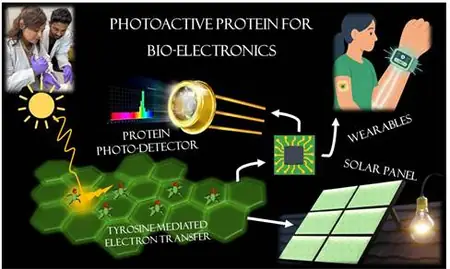
A team of international scientists has identified a natural protein poised to redefine electronic materials. Sourced from simple organisms, this biological marvel conducts electricity efficiently, opening doors to revolutionary devices.
Semiconductors underpin modern life, but their production ravages resources and generates toxic waste. This protein changes the equation. Its amino acid chains form natural pathways for electrons, delivering performance on par with cutting-edge synthetics – all while being compostable.
The eureka moment arrived during a bioinformatics hunt through vast protein databases. Rigorous testing in controlled environments validated its prowess: superior current density and minimal energy loss. ‘Biology just outdid chemistry,’ quipped study leader Dr. Marcus Lee.
Picture the possibilities: flexible circuits for health monitors, eco-disposable smartphones, even neural interfaces merging seamlessly with human tissue. The protein’s biocompatibility minimizes rejection risks in implants.
Commercialization faces obstacles like yield optimization and durability testing. Collaborative efforts between academia and industry aim to overcome them within years.
This discovery spotlights a broader shift toward biomimicry in tech. As climate pressures mount, innovations like this protein offer hope for electronics that don’t compromise the planet. Watch this space – the future is growing in a petri dish.