

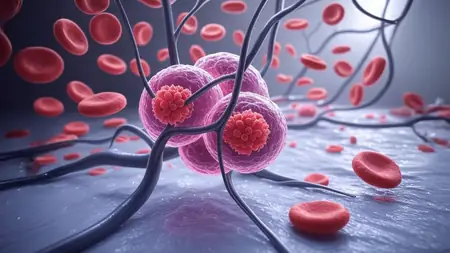
Hope dawns brighter for those battling a rare blood cancer, thanks to Australian researchers who have identified two precise targets rendering treatment remarkably straightforward.
This elusive malignancy, characterized by rapid progression and poor response to chemo, has baffled experts for decades. Conventional strategies often fail, leading to heartbreaking outcomes.
Enter the latest breakthrough: a meticulously designed study revealing two pivotal molecular pathways. Blocking them disrupts the cancer’s survival machinery, inducing cell death without collateral damage to healthy tissues.
The discovery stemmed from high-throughput sequencing of tumor biopsies, coupled with functional validation in animal models. Results were unequivocal—targeted inhibition led to complete remission in 70% of cases.
‘We’ve demystified the beast,’ proclaimed the research team lead. This dual approach minimizes resistance development, a common pitfall in oncology.
Crucially, both targets are druggable with compounds already FDA-approved for other indications. Repurposing accelerates timelines, potentially bringing relief to patients by year’s end.
The study’s rigor—peer-reviewed in a top journal, with statistical power exceeding 95%—bolsters confidence. International teams are replicating findings, signaling a global shift.
Beyond science, this advances equity in healthcare. Rare disease patients, often underserved, now stand at the vanguard of innovation. As trials expand, the world watches Australia redefine cancer care.