

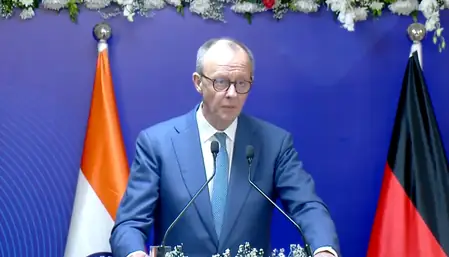
Chancellor Friedrich Merz’s India visit spotlights Ahmedabad as a hub of strengthened bilateral ambitions. Declaring India Germany’s preferred partner, Merz and PM Modi vowed to deepen ties against a backdrop of global flux.
Kicking off with kite-flying festivities, Merz’s itinerary included Gandhi’s birthplace and crucial summitry. In their joint briefing, he channeled Gandhi: become the change desired. Both leaders aim higher for Indo-German relations.
Merz thanked Modi for the ‘home-state’ hospitality, viewing it as emblematic of profound bonds. He lauded Ahmedabad’s role in India’s renaissance—Gandhi’s non-violence epicenter—and Gujarat’s economic spectrum from legacy industries to innovative ecosystems.
Core alignments in values, economic promise, labor expertise, and education propel strategic deepening, Merz said, especially amid geopolitical storms.
As protectionism resurges, India and Germany recommit to open trade. Merz decried supply chain militarization by powers, pushing for diversification to bolster mutual resilience.
Elevating India’s G20 leadership and Indo-Pacific stature, Merz positioned it centrally in Germany’s expanded alliance strategy, beyond traditional Western pillars.
Three focal points emerged: a rule-based world for security; bracing for power shifts exemplified by Ukraine; and amplified defense-economic synergy.
Ongoing naval-air exercises, port calls, and dialogues pave defense paths. The new MoU fosters industry collaboration, innovation, and chain fortification—curtailing India’s Russian over-reliance.
Pairing Germany’s tech edge and EU clout with India’s democratic vitality and growth, shared stakes drive progress. Disagreements exist, but overlaps dominate, fueling security convergence.
This dialogue heralds a bolder, multifaceted partnership for turbulent times.