

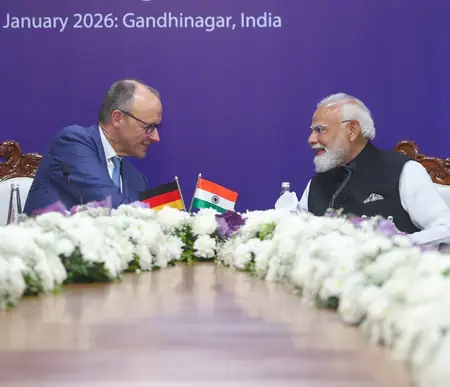
German opposition leader Friedrich Merz’s high-stakes visit to India has been hailed by PM Narendra Modi as a refreshing catalyst for the India-Germany strategic partnership. Amidst a packed schedule of bilateral meets, the tour highlighted untapped potentials in economy, security, and sustainability.
Kicking off in the capital, Merz engaged in marathon talks with Modi, external affairs minister, and industry captains. Central themes included fortifying supply chains post-pandemic disruptions and accelerating the green transition. ‘This exchange has revitalized our ties,’ Modi affirmed, pointing to Germany’s role as India’s largest EU trading partner.
Defense dialogues marked a breakthrough, with explorations into co-production of next-gen equipment and intelligence sharing. Merz, eyeing the chancellery, stressed Europe’s pivot towards Asia, viewing India as an indispensable counterweight in a multipolar world. Investment pledges flowed, with German firms committing billions to India’s EV ecosystem and smart cities.
Cultural and academic bridges were reinforced through new scholarships and language centers. The leaders also tackled pressing issues like food security and migration, pledging joint humanitarian efforts. A key outcome was the launch of a bilateral innovation fund, seeding startups in cleantech and healthtech.
Media buzz surrounded the visit, capturing the leaders’ chemistry during a tree-planting ceremony symbolizing enduring growth. Experts predict this momentum will propel negotiations on a free trade agreement. As global headwinds intensify, the India-Germany axis stands resilient, promising mutual prosperity and stability in turbulent times.