

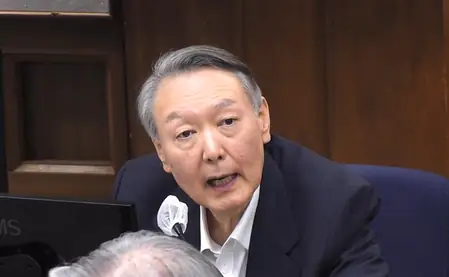
Former South Korean leader Yoon Suk Yeol faces a stark new reality: five years behind bars, as ruled by Seoul’s Central District Court on Friday. This conviction for impeding his own detention investigation caps a turbulent chapter ignited by his martial law gambit last December.
Prosecutors from special counsel Cho Yoon-sook’s office accused Yoon of weaponizing state machinery to evade scrutiny over his emergency decree, pushing for a decade in jail. The court, however, opted for moderation, convicting him on key charges while sparing two.
Judge Baek Dae-hyun laid out the evidence: Yoon’s orders to the Presidential Security Service to thwart warrant-serving investigators; exclusion of nine cabinet officials from critical martial law reviews; preparation and destruction of an altered decree draft; dissemination of deceptive press releases; and mandates to erase secure phone data used by top generals.
The decision affirms that even presidents fall under the Corruption Investigation Office’s purview during high-level inquiries. As anticipation builds for the February 19 rebellion hearing—where execution remains a prosecutorial ask—Yoon’s docket swells with eight trials touching martial law fallout, family graft claims, and a fatal 2023 marine incident.
This live-televised verdict, the third such spectacle for ex-presidents after Park and Lee in 2018, cements South Korea’s democratic resolve, holding former commanders-in-chief to the same standards as ordinary citizens.