

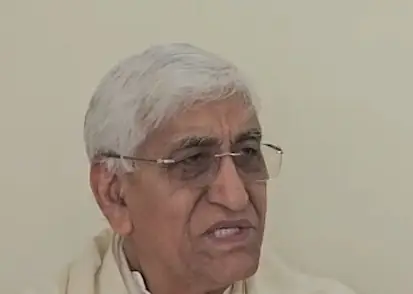
‘India is not Nepal, not Bangladesh.’ With these simple yet powerful words, Congress leader TS Singh Deo has drawn a firm line separating India’s political landscape from the chaos engulfing its neighbors. The statement, delivered during a press interaction, carries weight coming from a battle-hardened politician who has navigated coalition complexities and electoral battles.
Singh Deo systematically dismantled fears of Indian instability by pointing to concrete achievements: 1.4 billion people peacefully participating in world’s largest elections. Multi-party coalitions functioning at national and state levels. Independent institutions checking executive overreach.
The Chhattisgarh leader’s assessment gains credibility from his ringside view of governance. ‘We faced tribal insurgencies, Naxal threats, and COVID devastation—but our democratic processes never faltered,’ he said, crediting local self-governance and community participation.
Economically too, Singh Deo painted an optimistic picture. Steel production at record highs. Semiconductor investments pouring in. Startup ecosystem thriving. ‘This is not a failing state,’ he declared, contrasting India’s trajectory with Bangladesh’s garment industry collapse and Nepal’s hydropower investment drought.
Addressing opposition concerns about democratic backsliding, Singh Deo took a nuanced approach. ‘We will fight electoral battles fiercely, but we accept verdicts gracefully. That’s the difference between democracy and mob rule,’ he explained.
Singh Deo’s message extends beyond reassurance—it’s a political masterstroke. By claiming the mantle of democratic guardianship, Congress seeks to neutralize BJP’s nationalism pitch while exposing ruling party’s occasional flirtations with strongman rhetoric.
On federalism, the Congress stalwart advocated ‘competitive cooperation’ between states and Centre. He cited Chhattisgarh’s forest rights implementation and MSME growth as models worth emulating nationally.
As winter session approaches and state polls loom, Singh Deo’s timely intervention reminds political combatants that India’s real strength lies in its institutional maturity. In a region prone to democratic reversals, his words affirm what makes India different: depth, resilience, and above all, democratic faith.