

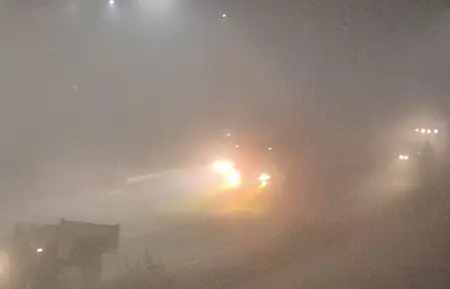
Dense fog has dominated Kotputli-Behror in Rajasthan for 15 straight days, disrupting transport networks, daily commutes, and farming operations in profound ways. The district’s residents are adapting to a new, hazy normal.
Behror’s dawn hours bring near-zero visibility, turning roads into treacherous paths. National highways host lines of vehicles inching forward past 11 a.m., with drivers maintaining distances amid 20-30 meter sight limits. Children bound for classes, professionals en route to work, and interstate passengers grapple with delays and safety concerns, amplifying crash potentials.
Intensifying the ordeal is arctic-level cold, fueled by northerly gusts that chill bones till late morning. Communities rely on community fires and thermal wear. Afternoons warm to 20°C, thinning the fog veil temporarily.
Rabi season farmers confront a nightmare: excess dampness from fog invites pathogens to mustard, wheat, and gram crops. Yields hang in balance, prompting vigilant crop checks and expert consultations.
IMD signals incoming rains from a western disturbance, likely to prolong wintry conditions or shift fog dynamics. Officials broadcast pleas for travel restraint and vigilant driving, backed by traffic department initiatives like mobile advisories and signage.
In this fog-laden standoff, the emphasis shifts to resilience—equipping vehicles with fog lights, planning alternate routes, and safeguarding vulnerable crops—until weather patterns realign.