

India’s historic alliance with Namibia traces back to a pivotal moment in 1946 when it spotlighted Namibia’s independence at the United Nations. This early endorsement fueled Namibia’s liberation efforts, evolving into a multifaceted partnership rich in history and strategy.
This sparsely populated southern African nation—3.1 million residents across 825,000 square kilometers—overflows with resources: minerals, energy, and seafood that power global markets.
Diplomatic ties formalized in 1990, with India’s Windhoek mission anchoring bilateral engagement. The duo collaborates closely in global arenas including the UN, Non-Aligned Movement, and Commonwealth.
Commerce is a cornerstone, with trade volumes climbing steadily. Key imports to India include uranium, diamonds, precious stones, copper, zinc, seafood, petroleum, energy products, machinery, and tools. From India, Namibia gets petroleum derivatives, drugs, machines, vehicles, rice, wheat, pulses, spices, auto parts, engineering items, and military hardware. Indian investments thrive in mining, power, health, and tech sectors.
Culturally, yoga and Ayurveda draw enthusiasts, and Indian customs are revered. The compact Indian diaspora contributes significantly to local dynamism. Academic scholarships strengthen people-to-people links.
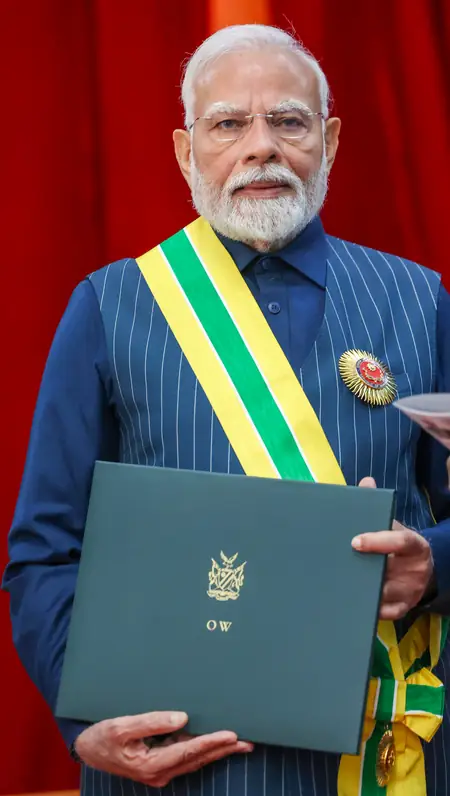
Namibia honored PM Modi with its top award, the Order of the Most Ancient Welwitschia Mirabilis, symbolizing unbreakable bonds. Looking forward, this relationship heralds mutual advancement in trade, culture, and geopolitics.