
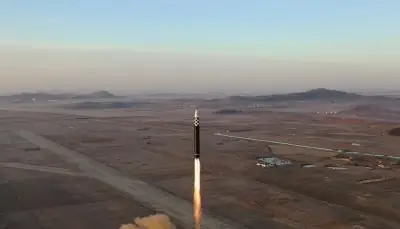
Tensions soared in East Asia as North Korea unleashed two ballistic missiles toward Japan on Tuesday, igniting Tokyo’s vehement opposition. The calculated provocation sent ripples through diplomatic channels and military commands alike.
Detailed telemetry from Japan’s monitors revealed one missile’s peak of 80 km and 350 km flight path over the Sea of Japan. Originating north of the capital at mid-afternoon, the ordnance avoided Japan’s EEZ, per preliminary findings.
Acting decisively, PM Shigeru Ishiba instructed a full-spectrum intelligence sweep to protect civilian aviation and vessels. No casualties or disruptions emerged, yet the stunt rattled nerves in the archipelago.
South Korean counterparts confirmed the timeline, while America’s regional command vowed unwavering alliance support. ‘Fully briefed and aligned with allies—no direct peril at this stage,’ they assured.
Contextualizing the barrage, Pyongyang’s December maneuvers under Kim’s gaze involved precision cruise missiles arcing for 17+ minutes across the Yellow Sea. Aimed at proving offensive reliability, they hit marks flawlessly.
Simultaneously, Kim greenlit a behemoth 8,700-ton sub infused with nuclear tech, signaling ambitious naval ambitions. Official narratives framed it as unending nuclear fortification.
Geopolitical observers tie this to frayed dialogues and rival maneuvers. Japan, enhancing its shield, demands collective resolve from the UN and partners to deter repeats.
With echoes of past crises, this episode spotlights the urgent need for de-escalation talks to prevent miscalculations in these crowded seas.