
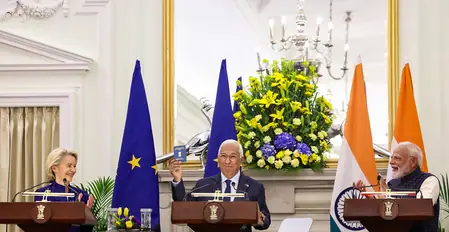
India’s pact with the European Union marks a pivotal shift, flinging open doors for textiles, pharmaceuticals, chemicals, and jewelry exporters. As experts dissect the Free Trade Agreement, the narrative is clear: enhanced market entry, job creation, and supply chain reliability in a turbulent world.
Dodhiya Synthetics’ Bhadesh Dodhiya highlights the EU’s colossal $250 billion textile appetite, where India’s under 10% slice pales against neighbors’ duty-free $30-40 billion hauls. Geopolitical volatility has EU buyers hunting dependable chains—enter India, with its steady governance and demographic dividends.
Commerce Ministry efforts under PM Modi have primed textiles for takeoff, demanding EU-compliant upgrades. Dodhiya’s recycling and raw material outfit, with Europe taking 20% of output sans concessions, anticipates portfolio enhancements for quality and price competitiveness.
Sustainability, Europe’s cornerstone, dovetails with India’s prospects. Bolstered MSME upgrades via Atmanirbhar Bharat promise a fortified export engine, leveraging India’s democracy, youth, and market scale for investment allure.
Jewelry shines separately: ACPL’s Rohit Gupta terms the FTA transformative for labor-intensive crafts. Jaipur’s legacy in gem work positions India to dominate EU manufacturing, importing components duty-free for value-add, targeting premium markets from France to Finland.
Former EU producers in Poland and Romania cede ground to India’s cost-effective creativity. Spanning 27 nations, this market offers boundless potential, making the FTA a cornerstone for India’s employment surge and enduring trade edge.