
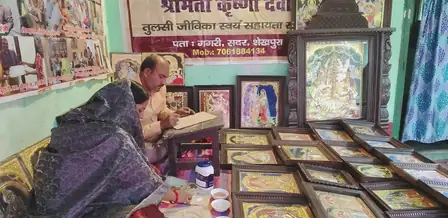
Empowerment blooms in Bihar’s Sheikhpura district, where Krishna Devi from Gunhesa village has sculpted a thriving career in Tanjore painting. Despite humble beginnings marked by low literacy and social hurdles, her Jivika journey has made her a symbol of resilience and self-reliance.
Affiliating with Jivika, she revived the sophisticated Tanjore style locally, blending tradition with livelihood. Chennai training equipped her for the meticulous process: fabric-wrapped plywood forms the canvas, raised motifs from lime-glue mixes take shape, colors add depth, and 22-carat gold bestows opulence. Pieces demand 15-plus days of dedicated work.
Nationwide exhibitions have spotlighted her art, with strong sales in Delhi yielding four lakh rupees from Bihar operations. Organized invites cover logistics, fueling her expansion.
Husband Praveen shares their narrative: Jivika ties since 2016, Chennai layoffs in 2020, a Bihar homecoming met with Jivika support—skill validation, event access, and loans. Village derision flipped to accolades, including a Noida Haat award.
Tanjore’s golden sheen elevates its status, a testament to artistry’s demands. Material procurement challenges persist, necessitating Tamil Nadu runs, but perseverance prevails. Stalls at Patna’s Gandhi Maidan, Bhubaneswar, Indore, Gurugram, and Haryana fairs have ignited widespread appreciation for her Krishna, Ram, Vishnu, Lakshmi, and Shiva depictions.
Krishna’s odyssey highlights how structured guidance and state aid enable village women to excel in heritage crafts, achieving not just income but societal impact and cultural continuity.