
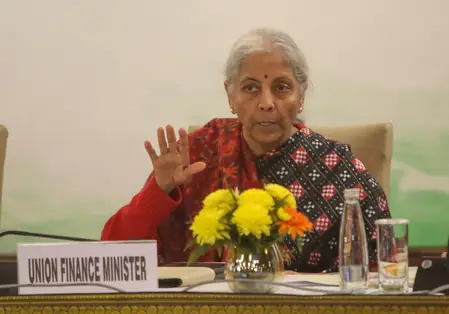
In a detailed briefing on the Economic Survey 2025-26, Finance Minister Nirmala Sitharaman celebrated transformative gains in education, from grassroots schools to premier universities. India’s colossal system educates 246.9 million students across 1.47 million schools, backed by 10.1 million teachers—one of the largest globally.
GER figures show promise: primary at 90.9%, upper primary 90.3%, secondary 78.7%, higher secondary 58.4%, inching towards NEP’s universal enrolment by 2030. HEIs have ballooned to 70,018 by mid-2025 from 51,534 a decade ago, with enrolment hitting 44.6 million. Now featuring 23 IITs, 21 IIMs, 20 AIIMS, and IITs abroad in Zanzibar and Abu Dhabi.
Reforms shine: 2,660 institutions in Academic Bank of Credits with 46 million IDs. Universities introduce multiple entry points and flexible exits; global partnerships offer joint degrees, with foreign campuses on the horizon. Vocational integration in schools tackles the stark training deficit—only 0.97% of teens trained per recent data—crucial for job markets, dropout prevention, and demographic leverage.
PM SHRI’s 13,076 schools, ECCE in vast networks, and schemes like Kitaab Ek Padhe Aneka deliver culturally resonant content. NEP’s 5+3+3+4 model extends schooling to 15 years, focusing on FLN, secondary universality, and skills for a lifelong learning paradigm.
Faculty enhancement via ‘Professors of Practice’ rounds out efforts. Sitharaman emphasized turning schools into lifelong hubs, aligning education with economic needs. These steps herald an empowered generation ready for India’s growth story.