
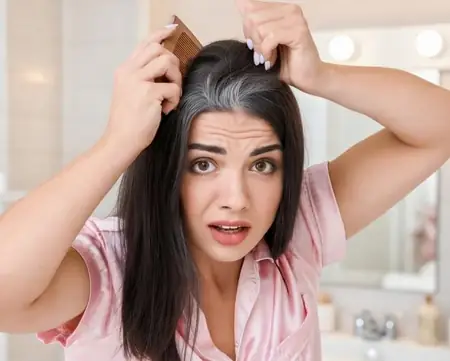
White hairs popping up before 30? You’re not alone. This phenomenon, dubbed canities praecox in medical terms, affects millions globally, fueled by an interplay of DNA, daily pressures, nutritional voids, and toxic exposures. Understanding the mechanisms empowers proactive defense.
Hair gets its hue from melanin variants crafted by follicle-embedded melanocytes. Youthful vigor keeps production humming, but assaults from within and without erode this. Aging naturally dims output, but premature hits come swifter via multiple channels.
Heredity is the wildcard. Genome-wide scans identify over 70% heritability; Asian cohorts gray post-30, contrasting earlier Caucasian onsets. Family trees laden with early grayers forecast higher risk—trace yours for clues.
Dietary lapses loom large. Vitamin B12 shortfall, rampant in 15% of populations, correlates directly with graying via impaired DNA synthesis in pigment cells. Iron anemia, zinc dips, and protein poverty compound woes. Counter with diverse intake: spinach salads, almond snacks, yogurt parfaits, and poultry mains.
Psychological strain amplifies damage. Cortisol floods from deadlines or traumas trigger hydrogen peroxide buildup, bleaching hair from the root. Research from Columbia University ties life stressors to accelerated timelines—those reporting high anxiety gray 18 months sooner.
Lifestyle culprits abound: nicotine constricts vessels starving roots, alcohol depletes thiamine, insomnia disrupts repair cycles, fast food ignites inflammation. Pollution’s particulates penetrate shafts, catalyzing free radical chains.
Reclaim control through holistic shifts. Stress management via therapy or tai chi, balanced macros with micros, quitting vices, and antioxidant shields like green tea. Biotin or PABA supplements aid some, per anecdotal reports. Gray hair whispers change—listen and adapt.