
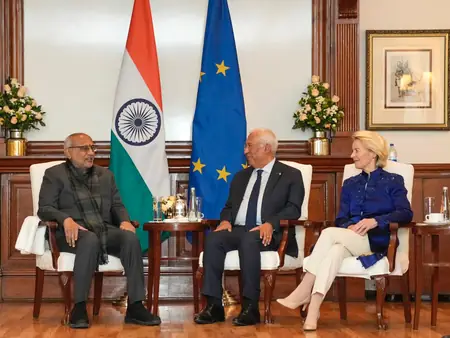
The buzz around the India-EU Free Trade Agreement is electric, positioning it as the ‘mother of all deals’ in international commerce. Experts weigh in with varied perspectives, sparking conversations even in Pakistan and Bangladesh on its ripple effects.
As global giants turn tariffs into weapons for supply chain dominance, this FTA represents a strategic counter by embracing transparency in talks despite dependencies. Trump’s tariff gambit has accelerated these shifts, urging adaptive responses.
This isn’t just about duties—it’s a blueprint for nations to unite on shared strengths while safeguarding values. India signals its resolve to ascend as a premier manufacturing and services hub, rooted in its unique worldview.
Europe demands substance over spectacle, measuring success via tangible steps in trade access, energy overhauls, sector transitions, tech integrations, and chain safeguards. Company-driven collaborations in critical industries will be the true test.
Tariffs drop or vanish for 97% of EU goods into India, with 99% of Indian exports gaining value-preferred entry. A 40% levy persists on EU autos, balanced by India’s gradual duty phase-out on vital industrials.
Under pressure to diversify alliances, Europe views the FTA as a gateway to robust ties. The TTC’s ongoing efforts in semiconductors and digital interoperability set the stage, with the deal enabling trusted ecosystems and R&D synergies.
EU reports underscore desires to decouple tech dependencies from the US, paving ways for India-EU ties in AI and data trust—alternatives to US-China hegemony. This could transform 2024 into a milestone year for strategic Indo-EU bonds.