
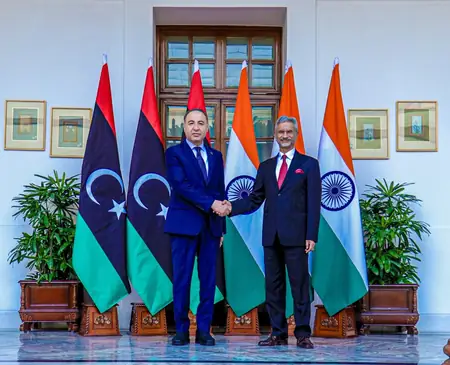
Delhi emerged as a diplomatic hotspot Friday, hosting arrivals for the prestigious second India-Arab Foreign Ministers’ Meeting. A standout bilateral was between India’s Dr. S. Jaishankar and Libya’s Foreign Minister Najm El-Deen El-Arbash, where they charted paths for enhanced economic synergy amid Libya’s ongoing turmoil.
Jaishankar posted meeting visuals on X, praising the dialogue on trade expansion, infra development, and energy partnerships. ‘Thank him for the briefing on Libya’s situation. Stressed India’s push for talks and diplomacy to ensure peace and stability,’ he added, encapsulating the constructive vibe.
This interaction highlights India’s nuanced foreign policy: engaging conflict zones economically while advocating de-escalation. Libya’s rich hydrocarbon reserves make it a prime partner, despite governance woes.
MEA’s warm welcome for El-Arbash emphasized the visit’s potential. ‘His role in IAFMM and Delhi events will propel our bilateral ties forward positively,’ it tweeted.
Somalian FM Ahmed Moalim Fiqi’s presence drew similar enthusiasm: ‘This trip will deepen India-Somalia relations.’ Preceding them, Arab League SG Ahmed Aboul Gheit’s arrival was celebrated as a milestone. ‘Delighted to host him for the summit—symbolizing strong India-Arab commitments across sectors.’
The gathering, spanning two days, addresses pressing issues like food security, climate action, and counter-extremism. With over a dozen Arab nations represented, it amplifies India’s voice in Arab affairs.
Historically, India enjoys deep-rooted bonds with the Arab bloc, fueled by people-to-people links and commerce topping $100 billion annually. Jaishankar’s engagements signal acceleration, potentially unlocking infrastructure deals and energy pacts.
In a world of realignments, such forums fortify India’s multi-alignment strategy, blending pragmatism with principles for enduring regional stability.