
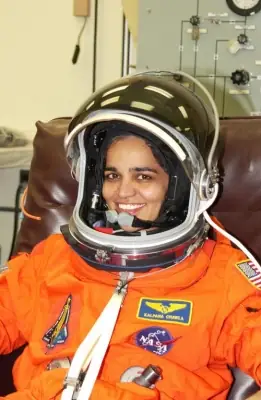
Kalpana Chawla’s journey from rural India to the stars ended in unimaginable loss on February 1, 2003. The Columbia disaster not only claimed seven lives but also shook NASA’s foundations, prompting sweeping safety reforms.
Hailing from Karnal, Haryana, born March 17, 1962, Kalpana was a child prodigy in science. After aeronautical engineering from PEC Chandigarh, she earned advanced degrees from universities in Texas and Colorado. Selected by NASA in 1994, she trained rigorously for spaceflight.
November 1997 saw her blast off on STS-87. Kalpana’s robotic arm work and satellite deployment were flawless, cementing her as a space pioneer and the first Indian woman in orbit.
The STS-107 mission launched January 16, 2003, into a 24-hour-a-day science bonanza. Experiments probed everything from fire behavior to lung tissue growth, amassing terabytes of data.
Tragedy unfolded during descent over the southern US. A hole in the left wing, inflicted by falling foam at liftoff, exposed the aluminum frame to 3,000°F plasma. Within seconds, structural failure doomed Columbia, killing Kalpana and her teammates mid-air.
The world grieved. Memorials, schools, and NASA’s own tributes immortalized her. President Bush awarded her the Congressional Gold Medal. Kalpana’s words echo: ‘You are just your intelligence.’ Her intelligence lit the stars, forever.