
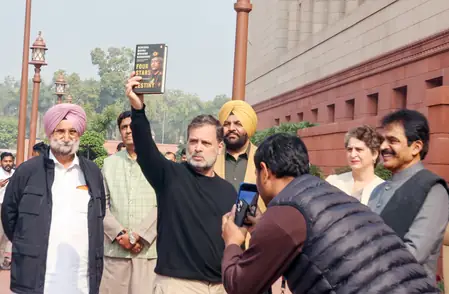
Rahul Gandhi turned heads in New Delhi by publicly displaying General Manoj Mukund Naravane’s book, leveling serious charges against the government’s handling of a Chinese border violation. The Congress stalwart claimed Indian soldiers, facing tanks inside their territory at Kailash Range, were eager to respond aggressively but were left hanging by indecisive superiors.
Addressing reporters, Gandhi dismissed denials about the book’s authenticity. ‘Look, it’s real—General Naravane’s own words. Every Indian youth should read this eye-opener,’ he insisted, noting restrictions on parliamentary references.
The narrative Gandhi unpacked is gripping: Naravane alerts Rajnath Singh to the tank incursion. No directive. Appeals to Jaishankar and NSA go unanswered. Persisting with Singh, the reply is to await ‘top’ input. The verdict? No firing without clearance, even on home turf.
‘Our forces were primed for action—Chinese tanks had crossed the line. Yet, the message was ‘Do what’s right in your judgment.’ That’s shirking responsibility,’ Gandhi charged.
Naravane’s poignant line seals the critique: ‘I felt profoundly isolated; the system forsook me.’ This paints a damning portrait of command vacuum during a potential flashpoint.
Vowing to confront PM Modi with the book in Lok Sabha, Gandhi frames this as systemic rot. The disclosure fuels ongoing discourse on India-China dynamics post-Galwan, spotlighting if political caution undermined operational freedom.
Stakeholders from defense analysts to opposition ranks call for transparency. As the nation reflects on border sovereignty, Naravane’s account—amplified by Gandhi—could reshape narratives on leadership under fire, urging reforms for unwavering support to the armed forces.