
Cabinet Decisions
Date – February 04, 2026
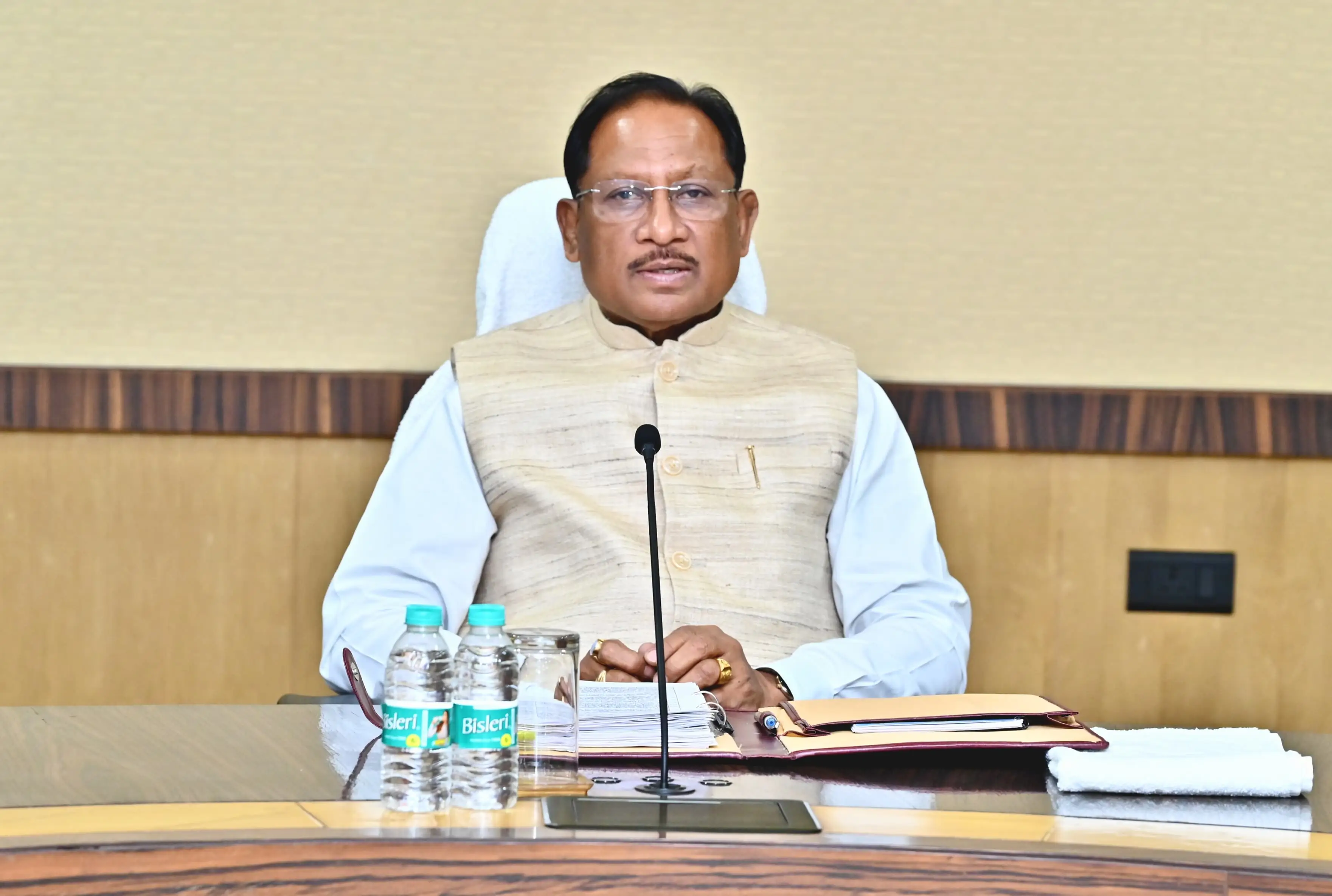
A number of important decisions were taken in the cabinet meeting chaired by Chief Minister Shri Vishnu Deo Sai here today at Mantralaya Mahanadi Bhawan –
1. Taking a big step towards the prevention of narcotic substances, the Council of Ministers approved the creation of 100 new posts in the main budget for the financial year 2025-26 for the formation of District Level Anti-Narcotics Task Force in 10 districts of the state. These include Raipur, Mahasamund, Bilaspur, Durg, Bastar, Sarguja, Kabirdham, Jashpur, Rajnandgaon and Korba districts.
2. In the cabinet meeting, approval was given for the creation of 44 new posts in the main budget for the financial year 2025-26 for the formation of SOG (Special Operations Group) under the Special Branch of the Police Headquarters. The job of SOG is to immediately reach the spot in case of any major or sudden incident, control the situation, and quickly neutralize a terrorist attack or serious threat. SOG is a specially trained team prepared for such dangerous tasks.
3. The Council of Ministers took an important decision to establish Flight Training Organizations (FTOs) at various airports and airstrips in the state and approved the guidelines for their operation. Under this, a Flight Training Organization will be established in Chhattisgarh to facilitate pilot training in the state. This institute will be useful in view of the increasing demand in the aviation sector and to provide employment to the youth. Facilities like aircraft recycling, helicopter bunking, and aero sports will be developed. The establishment of Flight Training Organizations will be done through private participation.
4. The Council of Ministers approved the Chhattisgarh Innovation and Startup Promotion Policy 2025-26. This policy will promote the startup ecosystem as well as incubators and other stakeholders. Chhattisgarh can be developed as a major innovation hub in the country. Improvement in the States Startup Ranking released by the Department for Promotion of Industry and Internal Trade, Government of India, will increase the investment attraction in the state.
5. The Council of Ministers has decided to hand over 35 residential colonies developed and completed by the Chhattisgarh Housing Board and Raipur Development Authority to Municipal Corporations and Municipalities. These colonies will include open plots, gardens, and other public amenities. However, residential, commercial, and semi-public saleable properties will not be included.
Due to the non-transfer of these colonies, the residents are not receiving many basic amenities. Residents have to bear double expenses for the maintenance of the colonies. On one hand, they pay property tax to the municipal corporation, and on the other hand, they also have to pay maintenance charges to the housing board. With the transfer of these colonies, urban bodies will be able to provide facilities like water, electricity, roads, and sanitation, and the colony residents will get relief from additional maintenance charges.
6. The Council of Ministers has decided to build a large multi-storey building by the Naya Raipur Atal Nagar Development Authority for government departments and corporation offices in Naya Raipur Atal Nagar, and space will be allotted to departments here to ensure full utilization of land.
7. The Council of Ministers has granted the power to allocate government land in the concerned areas to the Collectors of the respective districts for planned development and to expedite development works in the Sirpur and Arpa regions.
It is noteworthy that the objective of the Sirpur Special Area Development Authority and Arpa Special Area Development Authority is the planned and holistic development of the respective riverbank areas. For this, it is necessary to effectively implement the master plan, land planning, and urban development plans. Allocation of government land was necessary to expedite development works. Considering the current financial condition of both authorities, it has been decided to allocate government land at a premium of Rs. 1/- and ground rent. Also, the authority to allocate land has been given to the respective District Collectors.
8. The Council of Ministers has approved the implementation of the “Chhattisgarh Cloud First Policy” in the state. The proposal for the Chhattisgarh Cloud First Policy was presented by the Department of Electronics and Information Technology, Government of Chhattisgarh.
According to the Chhattisgarh Cloud First Policy, all departments, undertakings, and autonomous institutions of the state government will procure cloud services only from cloud service providers approved by the Ministry of Electronics and Information Technology, Government of India, or from secure data centers and disaster recovery centers located in India. For any special or exceptional requirement, permission from the State Cloud Council will be mandatory.
Under the policy, cloud migration of low-priority applications and archival data will be completed by 2027-28, and high-priority services by 2029-30. All new applications will be developed on cloud-native technology.
The Cabinet has authorized the Department of Electronics and Information Technology to make necessary amendments to this policy in the future. This policy will ensure cost reduction in IT infrastructure, operational efficiency, improved cybersecurity, continuity of services during disasters, and 24×7 availability of citizen services. Additionally, the security, transparency, and tracking system for citizen data will be further strengthened.
9. The Council of Ministers has approved the Mobile Tower Plan to expand digital infrastructure in Chhattisgarh state. Limited mobile connectivity in areas with geographical disparities and Left Wing Extremism-affected areas is hindering the effective implementation of government schemes. This plan will simplify and expedite the process of granting permissions and administrative approvals to the selected service providers for mobile tower installation.
Under the Mobile Tower Plan, towers will be installed in mobile network-less habitations selected under the plan. Digital connectivity will boost the rural economy, expand e-governance services, and promote socio-economic development. The plan will also improve security, especially in Left Wing Extremism-affected areas where communication facilities will be available, bringing transparency and efficiency to administrative work. With the implementation of the Mobile Tower Plan, access to schemes such as Public Distribution System, Direct Benefit Transfer, Health Services, Education, and Emergency Services Dial 112 will be easily available to citizens in remote areas.