
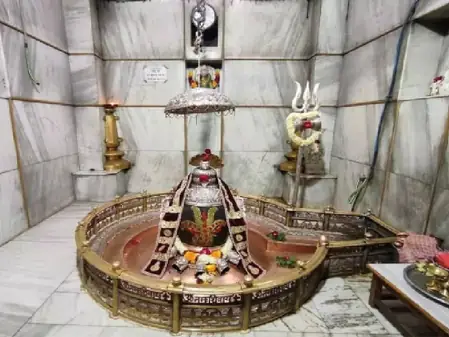
In the heart of Ujjain, where Shipra’s waters whisper ancient hymns, Mahakaleshwar Temple reigns as a Jyotirlinga beacon, promising profound life shifts through Shiva’s gaze. But savvy devotees know the pilgrimage peaks at Vriddha Kaleshwar Mahadev—a shrine older than the famed sanctum, embodying Mahakal’s venerable incarnation.
Positioned strategically before the main entrance, this relic houses a lingam indistinguishable from Baba Mahakal’s, receiving parallel shringar and worship. Myths portray it as Shiva’s primordial avatar, manifesting eons prior and enduring marauder assaults that fractured stone and spirit alike.
Its modest, battle-worn architecture hints at bygone sieges, yet vigilant upkeep sustains its glow. A stark contrast to Mahakal’s selective access, Vriddha Kaleshwar’s doors never close, granting touch-darshan freely. Peak seasons like Sawan and Maha Shivratri see fervent special worships, aartis unfolding in harmonious duplication.
Spiritual lore mandates this sequence: Mahakal first, then the elder for full blessings. Neglect it, and the journey falters. Amid Ujjain’s constellation of sacred sites, Vriddha Kaleshwar emerges as the foundational pillar, its antiquity fueling endless miracles.
Today, as heritage efforts intensify, this hidden elder draws a devoted niche, underscoring that true enlightenment honors layered legacies. Pilgrims leave transformed, their faith fortified by the timeless dialogue between youth and age in Shiva’s divine forms.