
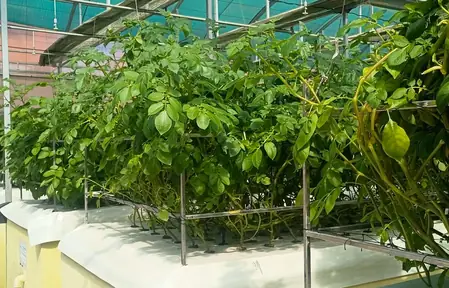
Madhya Pradesh’s Gwalior is witnessing a futuristic farming feat: potatoes thriving in thin air. Rajmata Vijayaraje Scindia University’s Biotechnology aeroponics lab is the epicenter, developing 20 potato seed varieties that are 100% disease-free, nutrient-packed, and impeccably pure. This experiment signals a new era for sustainable agriculture.
Dr. Sushma Tiwari breaks it down: Tissue-cultured plants are hardened then shifted to the aeroponic setup, where soil plays no role. Roots suspend in air, nourished by fogging after a minor root pruning. Nutrient mist sprays for 30 seconds every three minutes, with climate controls fostering ideal conditions. Rapid root growth leads to airborne potato formation in just 45-55 days, easily harvested by raising the unit.
What sets this apart is the elite seed quality—pathogen-free and reliable, unlike vulnerable soil-based seeds. Price tags keep them lab-bound for now, under rigorous evaluation. The lineup features high-value red potatoes, industry staples for chipping and frying, and fresh pink-hued options with robust consumer demand.
The focus remains on pinpointing top-performing strains for real-world farming. Initial barriers like expense and expertise deter immediate farmer uptake. Hence, a two-year field research phase will validate scalability. Ultimately, this could empower growers with resilient seeds, curbing losses from diseases and climate woes, while meeting surging needs for quality produce.