
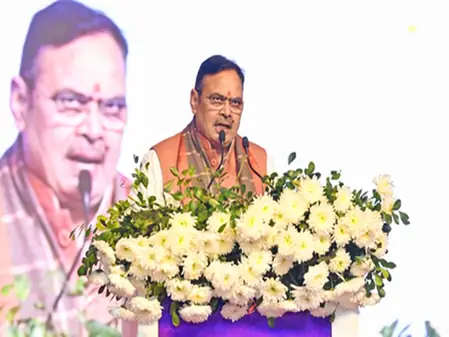
Rajasthan Chief Minister Bhajan Lal Sharma painted a vivid picture of his state’s Ayurvedic heritage during the National Institute of Ayurveda’s 50th anniversary in Jaipur. He asserted that Ayurveda’s foundations are firmly embedded in Rajasthan’s terrain, brimming with prospects for scaling medicinal plant cultivation.
Rich biodiversity in the state’s rugged hills and dense forests testifies to a historic affinity with Ayurveda. The CM revealed that his government is at the forefront of initiatives to elevate and popularize this system among the public.
From humble beginnings as a college in 1976, NIA has risen to national prominence as a deemed university, dominating in academics, research, skill development, and clinical services. Sharma expressed immense pride in its accomplishments over five decades.
He elaborated on Ayurveda’s pivotal role with yoga in enhancing India’s international stature, its sophisticated approaches to seasonal illnesses, and the scholarly legacy of ancient texts shaped by Charaka, Sushruta—the pioneer of surgery—and Vagbhata.
Aligning with PM Modi’s ‘Treat in India, Treat by India’ mantra, the AYUSH Ministry has fortified Ayurveda, yoga, Unani, Siddha, and homeopathy. Milestones like UN-recognized International Yoga Day, research surges, and infrastructure booms mark this progress.
Sharma outlined ambitious plans: proliferating hospitals, fortifying Panchakarma facilities, digitizing dispensaries, and amplifying research and education. This strategic integration promises to anchor Ayurveda in public health, heralding a healthier nation rooted in tradition.