
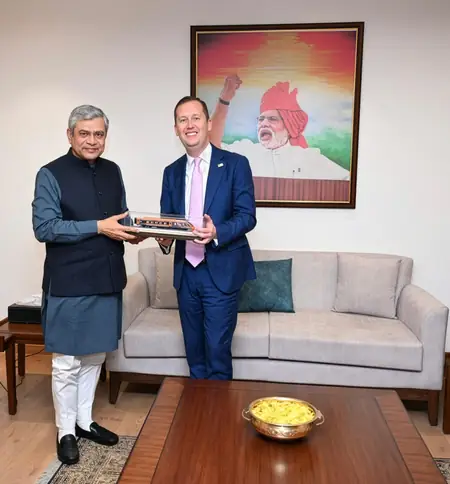
Strategic conversations unfolded in New Delhi when Ashwini Vaishnaw, Union Minister, convened with Eric Garcetti, the US Ambassador to India. Monday’s meeting delved deep into semiconductors, electronics production, and supply chain fortifications—core pillars of modern economic security.
Vaishnaw posted on X about the constructive dialogue, stressing mutual goals in tech self-sufficiency. ‘Great meeting with US Ambassador Eric Garcetti. Focused on strategic partnerships to strengthen semiconductors, electronics manufacturing, and supply chains,’ he shared.
Optimism extended to the upcoming India AI Impact Summit 2026, with expectations of robust US involvement. This landmark event, from February 16-20, has seen registrations surge past 35,000 from over 100 nations. It will feature 500 sessions and 500+ startups, positioning it as the biggest AI summit ever.
According to the Electronics and IT Ministry, the summit captures surging international interest in responsible AI. Emphasis lies on practical implementations with tangible societal benefits. Participants span governments, businesses, researchers, civil groups, and global bodies.
Anticipated attendees boast heavyweights: 15-20 heads of state, 50+ ministers, and 40+ CEOs. This assembly will shape AI’s future trajectory.
The timing is impeccable. India’s semiconductor ecosystem is booming, with approved projects worth billions. Collaborations with the US could enhance R&D, manufacturing capacities, and talent pipelines.
Discussions on supply chains address vulnerabilities exposed by pandemics and conflicts. Joint efforts might yield diversified networks, reducing risks and boosting efficiencies.
This high-level interaction underscores deepening India-US trust. It promises accelerated progress in critical technologies, fostering innovation and economic growth. The summit serves as a perfect platform to build on this momentum, heralding a new era of tech diplomacy.