
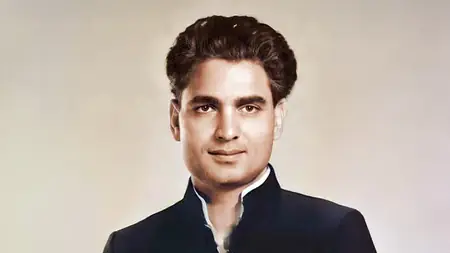
Quantity never defined Kamal Amrohi; quality did. The man who directed only four films created classics that outlive trends. Hailing from a landlord family in Amroha, Uttar Pradesh, on January 17, 1918, Amrohi’s poetic soul found expression in Mumbai’s film factories. Assisting Sohrab Modi, he scripted hits like ‘Jailor’, ‘Pukar’, and ‘Shahjahan’, earning nods from K.L. Saigal.
Directorial bow ‘Mahal’ (1949) revolutionized romance-thrillers. Ashok Kumar and Madhubala’s chemistry, plus Lata Mangeshkar’s ‘Aayega Aanewala’, made it a cultural phenomenon.
‘ Daéra’ (1953) with wife Meena Kumari explored marital depths tenderly. Then came ‘Pakeezah’ (1972), a 14-year odyssey born in 1958, stalled by spousal discord and delays. Amrohi’s all-encompassing role—writer, lyricist, director—elevated Meena’s tawaif to iconic status. Songs like ‘Chalte Chalte Yun Hi’ remain wedding staples, their melancholy mirroring the film’s essence.
Closing his filmography, ‘Razia Sultan’ (1983) boasted Hema Malini in a bold sultanate saga, visually stunning yet commercially challenged. Amrohi’s health halted further dreams.
His life: three marriages, passionate falls, bitter rises. From Bilqis Bano to Mahmoodi and children, to whirlwind union with Meena Kumari in 1952, ending in separation. Yet, death in 1993 at 75 saw him laid beside her, fulfilling a poetic vow.
Pioneering his production house and studio, Amrohi’s Mughal-esque perfectionism demanded excellence. Short-lived but profound, his oeuvre—rich in dialogue, music, emotion—continues to inspire filmmakers, proving vision trumps volume.