
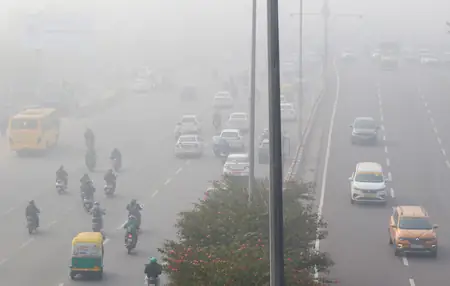
The brief respite in NCR’s toxic air has evaporated, plunging the region back into a smog crisis. Air Quality Index readings have spiked dramatically, pushing several locales into the dreaded red category, including Loni in Ghaziabad where AQI touched 400.
Real-time data from CPCB, DPCC, and IMD stations reveals widespread deterioration. Delhi’s pollution hotspots dominate the charts: Wazirpur leads at 375, followed by Chandni Chowk (365), Siri Fort (359), Shadipur (355), Rohini (345), Ashok Vihar (342), Sonia Vihar (357), Vivek Vihar (344), Alipur (310), Bawana (312), and Burari Crossing (321).
Across the border, Ghaziabad’s stations scream danger—Loni at 400, Indirapuram 355, Vasundhara 337, Sanjay Nagar 268. Noida’s sectors are equally afflicted: 125 (328), 116 (284), 1 (275), 62 (268).
Meteorological conditions are unhelpful, with IMD predicting persistent mist, temperatures maxing at 26°C and dipping to 10°C through February 13. Low wind velocity traps PM2.5 and other pollutants near ground level.
Analysts predict prolonged poor air until weather dynamics change. The public health implications are severe, with rising respiratory cases expected. This episode serves as a stark reminder of NCR’s chronic pollution vulnerability, urging immediate action on stubble burning, vehicular emissions, and industrial output.