
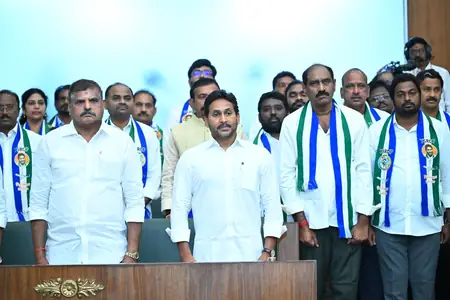
Andhra Pradesh’s political landscape heated up with YSRCP’s bold claim that the ruling TDP-led coalition coerced Governor S. Abdul Nazeer into reciting untruths before the assembly. This allegation surfaced amid chaos in the budget session’s inaugural joint meeting.
Opposition voices, spearheaded by ex-CM Y.S. Jagan Mohan Reddy’s YSRCP, labeled the governor’s speech a toxic mix of lies, doctored data, and smears. MLA Tatiparthi Chandrasekhar likened it to tabloid sensationalism from TDP-aligned press, underscoring the government’s discomfort with scrutiny.
The party contends the regime withholds opposition leader status from its 11 legislators to mask shortcomings, especially as debt surges to Rs 3.27 lakh crore in 20 months. Chandrasekhar defended YSRCP’s legacy: five years of scam-free welfare and development, succeeding TDP’s near-empty treasury.
Dismissing tall tales of property creation via projects like Electronics City or Quantum hubs, he accused Naidu’s team of diverting resources to Amaravati property booms and Visakhapatnam allocations. YSRCP walked out after protesting but affirmed readiness to return if accorded due recognition, appealing directly to the governor.
This clash reveals the coalition’s fragility against a vocal minority, highlighting fears of exposure on core issues like debt and development. As Andhra navigates its post-election phase, such confrontations could shape policy discourse and public perception of governance efficacy.