
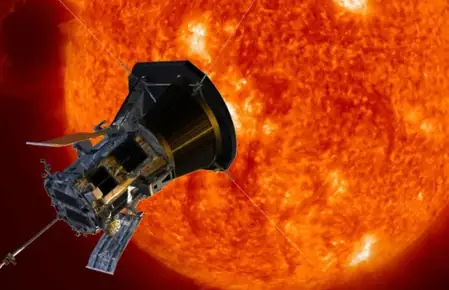
The sun, our life-giving constant, hides cosmic puzzles that summer swelter only amplifies. Aged 4.5 billion years, this hydrogen-helium giant powers the solar system from its core outward.
NASA data paints a colossal picture: 865,000-mile diameter, gravitational maestro corralling orbits. Hollow, it could swallow 1.3 million Earths. At 93 million miles distant, its rays sustain ecosystems.
Heliophysics tracks its dynamism—flares, winds, cycles. Though average among stars, studying it demystifies the cosmos. Extreme core heat—27 million Fahrenheit—drives nuclear furnace.
Visible photosphere: 10,000 Fahrenheit luminosity hub. Corona, however, escalates to millions, birthing the unsolved ‘heating problem.’ Why the thermal inversion?
Milky Way resident, hurtling 450,000 mph, galactic orbit spans 230 million years. Differential rotation on tilted axis reveals plasma behavior. Eleven-year cycles spawn space weather chaos: satellite glitches, grid failures.
Proxima Centauri gleams 4.24 light-years off. NOAA vigilance mitigates risks. The sun’s enigmas, corona chief among them, beckon missions peeling stellar layers, enlightening planetary fates.