
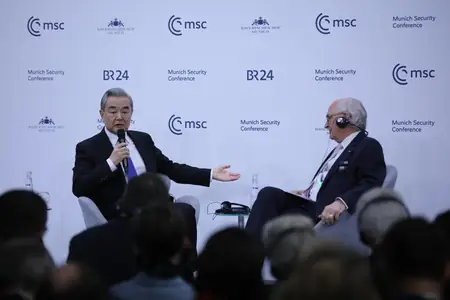
Beijing’s top diplomat Wang Yi used the global stage of the Munich Security Conference to issue a sharp critique of Japan’s stance on Taiwan and outline a roadmap for stable US-China relations. In his Saturday remarks to the ‘China in the World’ session, Wang voiced deep unease at Japan’s provocative drift.
Japanese officials’ flawed pronouncements on Taiwan, he argued, blatantly undermine China’s sovereignty and the international order forged after World War II. Notably, the sitting prime minister’s claim of an ‘existential threat’ from Taiwan Strait tensions marks a historic low for postwar Japanese rhetoric.
Contrasting sharply with Germany’s clean break from Nazism—through total dismantlement and legal prohibitions—Japan’s ongoing shrine visits to war criminals expose persistent expansionist yearnings, Wang contended. Militaristic shadows linger, fueling ambitions over Taiwan.
Japan faces a clear choice: absorb history’s wisdom, offer genuine remorse, and abandon perilous paths, Wang urged. He rallied peace advocates worldwide to admonish Tokyo, forewarning self-destruction from renewed aggression.
On the US front, Wang positioned the bilateral relationship as a linchpin for global peace, historically contextualized under Xi Jinping’s tri-pillars: respect, non-confrontation, and mutual benefit. China presses forward, but success hinges on American attitudes.
Trump’s overt respect for Xi and collaborative overtures on world issues were highlighted approvingly, against a backdrop of US elements still scheming to contain China.
Two scenarios loomed large in Wang’s analysis: fruitful partnership benefiting humanity, or destructive rivalry sparked by supply disruptions, containment policies, and Taiwan provocations. China is fully primed to protect its vital interests.
Wang ended on a resolute note, seeking opportunities foremost but equipped for threats, with unwavering faith in cooperation’s ultimate victory through mutual respect.