
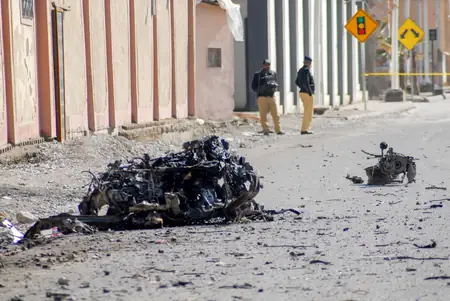
Global eyes are on Balochistan as militant-army firefights intensify. A probing report dismisses notions of spontaneity, tracing the unrest to prolonged military excesses and suppression tactics.
Eurasia Review’s in-depth piece highlights how army-dominated politics erodes state integrity, yielding severe fallout.
Official narrative fingers foreign interference; locals counter with tales of Islamabad’s iron-fisted rule—political sidelining, human rights breaches, resource grabs—building to explosion.
Though its deserts add little GDP, Balochistan shines in strategic narratives: CPEC hub for China, mining magnet for U.S. firms. Laden with copper, gold, coal, gas, it’s economic elixir.
Fortified garrisons can’t quell the storm; ongoing assaults expose peace’s fragility under guns.
Positioned critically, it opens to Arabian Sea, abuts Iran-Afghanistan, bridges China to seas.
Protests surge amid Army head Asim Munir’s rule—now Field Marshal—exacerbating rifts, stalemating strategy.
Since 2019 ops ramp-up, casualty figures fudged; enforced vanishes, bogus clashes, bulk arrests unaddressed.
Security-only lens blinds to politics; dissenters face jail, news bans, terror.
Balochistan, the report posits, festers as Pakistan’s looming peril.