
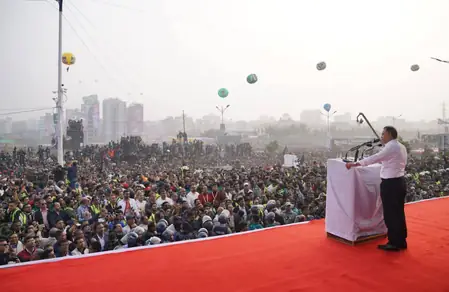
Bangladesh stands at a political crossroads as preparations peak for the February 17 swearing-in of Tarique Rahman’s government. Set for 4 PM at the National Parliament’s South Plaza, the event expects 1,200 international figures, amplifying its geopolitical weight.
BNP’s chairman rode a wave of voter support in the February 12 polls, winning 209 of 297 seats announced. With allies like Jamaat-e-Islami (68 seats) and independents, the coalition commands a strong mandate. Delayed results in two Chittagong seats don’t dent their momentum.
The guest list reads like a regional who’s who: Bhutan’s Tshering Tobgay, India’s Lok Sabha chief Om Birla, Pakistan’s Ahsan Iqbal, Nepal’s foreign minister, Sri Lanka’s health head, Britain’s Seema Malhotra, and potentially Maldives’ president. India’s MEA confirmed Birla’s role, framing it as a celebration of shared heritage and democracy: ‘India salutes the people’s choice in Tarique Rahman’s leadership.’
Event logistics break tradition, moving outdoors amid heightened security. The 13th parliament’s formation caps intense campaigning across nearly all 300 seats.
Tarique Rahman could become Bangladesh’s first male PM in decades, a symbolic shift. However, the road ahead bristles with threats—unrest and Islamist militancy plagued the prior interim government. As dignitaries arrive, questions swirl: Can this coalition deliver unity in a polarized nation? The ceremony offers first clues to Bangladesh’s future trajectory.