
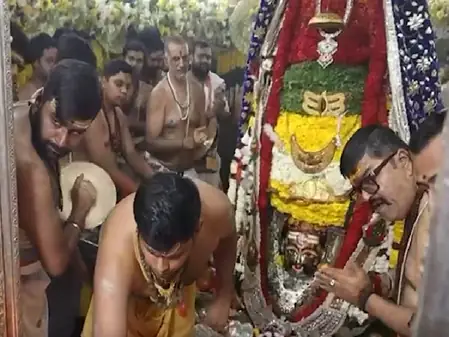
Maha Shivratri unfolded with unparalleled grandeur at Ujjain’s Mahakaleshwar Jyotirlinga, where Lord Shiva in his Mahakal form was resplendently attired in Saptadhan adornments. Pilgrims thronged the temple, drawn by the rare sight of Baba bedecked in seven grains and a majestic 11-foot sehra, evoking profound reverence.
Crafted from whole mung, sesame seeds, masoor dal, wheat grains, barley, black gram, and rice, this shringar symbolizes harmony with nature and pleas for agricultural abundance. Performed annually on this holy day, it elevates the festivities to a divine level.
Following elaborate pooja and abhishek, the sehra was affixed, prompting a surge in darshan seekers. The revered Bhasm Aarti, deferred from pre-dawn to afternoon, amplified the day’s sacred rhythm. Grains from the decoration were later distributed, cherished as tokens of fortune and stored for prosperity.
This tradition weaves deep spiritual and agrarian threads, reminding devotees of Shiva’s nurturing aspect. As chants filled the sanctum, the event reaffirmed Ujjain’s stature as Shiva’s eternal abode. With routines normalizing post-Monday, the divine encounter remains etched in collective memory.