
Imagine a world where questioning the heavens could mean death by fire. That’s the reality for Giordano Bruno, the visionary from 1548 Nola whose intellect outpaced his time. Trained in Dominican halls, he absorbed theology only to dismantle it with Copernican insights. Earth wasn’t the center; the universe was boundless, studded with stars birthing solar systems, and perhaps teeming with alien life.
Bruno wove science and philosophy into a tapestry where God infused every atom, truth yielded to empirical reason over revelation. These notions demolished Church pillars, branding him a heretic. Captured in 1592, his Roman Inquisition trial dragged on for years amid pleas to conform. Bruno’s iron will prevailed over fear, culminating in his immolation at Campo de’ Fiori in 1600.
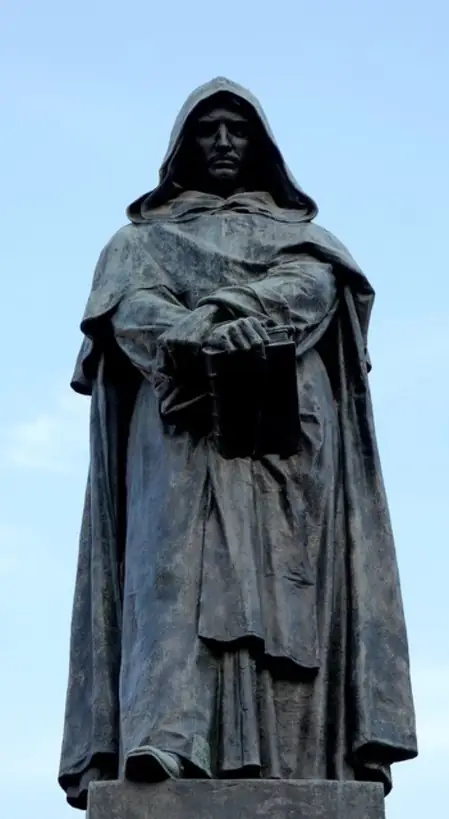
History vindicated him posthumously. Revered now as a free thought icon, his 19th-century statue looms defiantly at the burn site—a testament to resilience. Bruno’s bold cosmology prefigured Galileo and beyond, underscoring that paradigm shifts demand courage. In our era of space probes and multiverse theories, his warnings against suppressing dissent ring truer than ever, urging us to safeguard inquiry’s flame.