
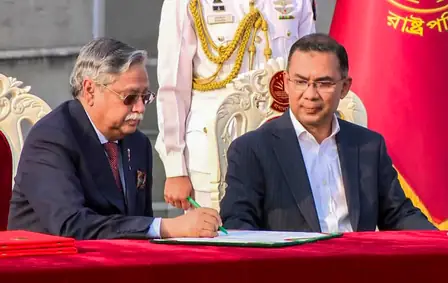
Tarique Rahman marked a new era Tuesday by swearing in as Bangladesh’s Prime Minister, assembling a formidable cabinet amid BNP’s poll triumph. But celebrations were tempered by a High Court bombshell: a petition questioning the recent referendum’s very existence.
Supreme Court advocate Mohammad Ataul Majid lodged the writ, deeming the February 12 vote ‘non-constitutional’ and urging its cancellation. Labeled public interest litigation, it asserts no constitutional provision allows referendums, rendering the Election Commission’s actions void.
The lawyer wants the court to probe why officials shouldn’t deem it illegal, naming the Chief Election Commissioner and secretaries as parties. Dhaka Tribune notes a potential hearing next week before Justice Fatima Nazib’s bench.
Official figures reveal 48,074,429 affirmative votes against 22,565,627 negatives, with turnout exceeding 60% for changes. Adding friction, Jamaat-e-Islami’s new MPs snubbed oaths over disputes with BNP’s reform body, while BNP members proceeded at the national parliament.
As Bangladesh navigates this constitutional crossroads, the petition spotlights vulnerabilities in its democratic framework. The outcome could either solidify Rahman’s mandate or ignite further unrest, captivating observers on the fragility of post-election governance.