
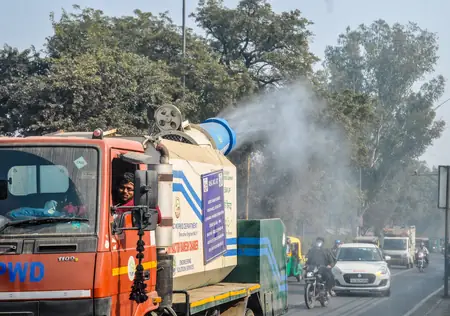
In a welcome move for the smog-battered National Capital Region, Stage 2 restrictions under the Graded Response Action Plan (GRAP) were lifted on Wednesday by the Commission for Air Quality Management (CAQM). Delhi’s average Air Quality Index (AQI) improved to 214, entering the ‘Poor’ category with visible declines in key pollutants, prompting this relief.
The decision stemmed from the GRAP sub-committee’s analysis of fresh Central Pollution Control Board (CPCB) readings and weather outlooks. AQI had been 261 on February 16, improved to 249 on the 17th, and reached 214 by the 18th, aided by favorable meteorological conditions.
IMD and IITM forecasts indicate sustained ‘Poor’ to ‘Moderate’ levels in the near term. CAQM’s statement read: ‘Noting the positive AQI trend in Delhi, we unanimously lift Stage 2 GRAP forthwith across NCR.’ Stage 1 measures persist, with directives for stricter implementation to curb any reversal.
GRAP’s staged approach activated Stage 2 on October 19, 2023, during a pollution surge. Today, emphasis lies on unwavering oversight. NCR agencies must vigilantly enforce Stage 1 actions like enhanced road sweeping and pollution source controls.
The public plays a pivotal role too – follow advisories on waste management and vehicle emissions. With the sub-committee tracking hourly data, future steps will adapt dynamically. This rollback underscores GRAP’s effectiveness, yet sustained efforts are needed against Delhi’s deep-rooted air crisis.