
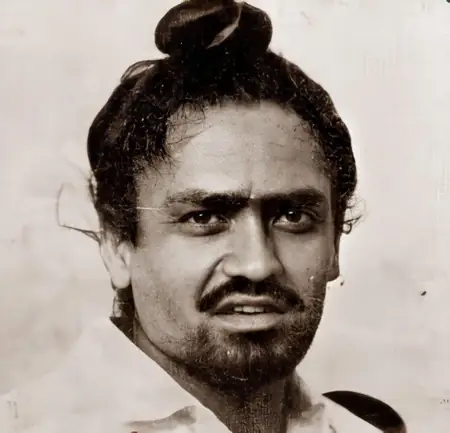
Picture a 12-year-old boy, fleeing massacre in Partition-torn Pakistan, truck-bound for safety in India. That boy, Jarnail Singh Dhillon, would captain India’s football team and become its biggest icon. Born February 20, 1936, in Faisalabad, he survived 1948’s anti-non-Muslim riots that killed family members, arriving in Amritsar with dozens of refugees. Punjab welcomed him, and football captured his heart.
His journey started at Khalsa College, Mahilpur (1952-56). In 1956, Hoshiarpur’s Khalsa Sporting Club launched his pro era. Joining Mohun Bagan in 1959 revolutionized his career; he stayed till 1968, facing off in Uganda, Kenya, Zanzibar, and Tanganyika.
As center-back extraordinaire, Jarnail dominated Asia in the 1960s. National captain 1965-67, he featured in 1960 Olympics, clinched Asian Games gold in Jakarta 1962, and chased silver at 1964 Merdeka. Santosh Trophy hauls included four with Bengal and one with Punjab in 1970-71.
Coaching prowess shone as Punjab won Santosh under him in 1974-75. Arjuna Award 1964 recognized his feats. He later directed Punjab sports (1985-94).
Legacy lived on through son Jagmohan, an Indian defender at 1993 SAARC Gold Cup in Pakistan. Jarnail’s final chapter was in Canada post-Jagmohan’s death; asthma ended his life October 13, 2000, in Vancouver at 64.
Jarnail Dhillon’s tale transcends sport—it’s a saga of survival, triumph, and enduring impact on Indian football.