
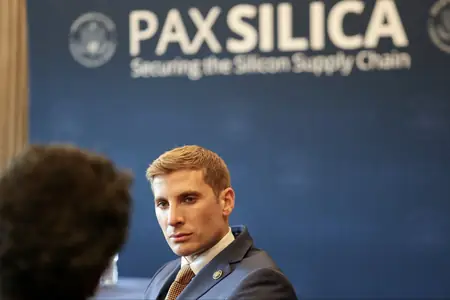
Defiance defined the tone at New Delhi’s India AI Impact Summit, where US and Indian dignitaries inked the Pax Silica Declaration. Deputy Secretary Jacob Helberg framed it as a living roadmap, not mere ink, rooted in shared history.
Recalling Alexander the Great’s Asian campaigns, Helberg pointed out the emperor’s hubris: viewing subjects as slaves yet to learn ‘no.’ India changed that, halting his march. ‘We were forged in refusal,’ Helberg said of India and the US. Both nations spurned transoceanic tyrants, rebuffed societal counsel, ended eras of subjugation, and grasped their own futures.
This essence powers their democracies, now called to action against economic perils. Concentrated supply chains breed blackmail; partners endure daily threats. One border-crossing command extinguished a vibrant Indian city’s glow, underscoring freedom’s fragile line.
White House OSTP chief Michael Kratsios celebrated America’s AI cradle status. Trump dismantled outdated frameworks demoting partners like India, launching a three-pronged strategy: innovation, infrastructure, international ties. US AI leaders’ market power surpasses FTSE 100 totals; infrastructure spends hit $700 billion—moonshot multiples.
US envoy Sergio Gor called India’s Pax Silica involvement pivotal. Immense talent pools and mineral advancements equip India to challenge rivals. Collaborative policies will amplify AI progress, enabling trusted tech dissemination worldwide, especially with India. The summit underscored a partnership rewriting global AI dynamics through mutual strength and resolve.