
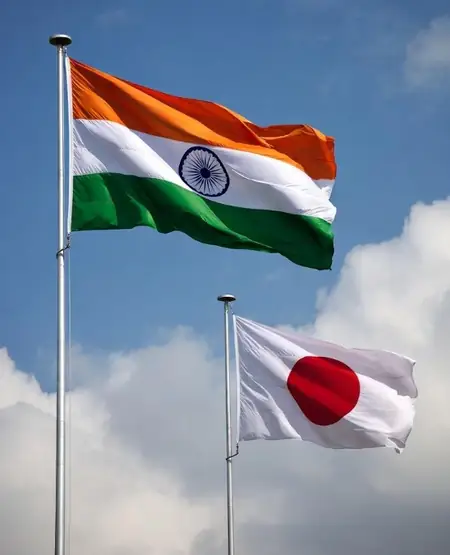
Electronics hardware is the new frontier in India-Japan relations, promising to redefine Asia’s tech landscape. This alliance transcends commerce, aiming to architect an open digital future amid rising geopolitical tech tensions.
The 2025 summit underscored commitments to semis, GenAI, and DPI, with India’s scale meeting Japan’s tech depth. Together, they offer a viable alternative to controlled digital ecosystems.
India’s triumph lies in its India Stack, connecting a billion via biometrics, payments, and agri tools—driving inclusive prosperity and setting a template for emulation.
Key highlight: Tata Electronics’ tie-up with Rohm for a ₹27,000 crore plant in Assam. It assembles automotive power chips for EVs, blending designs from India with Japanese tech, set for 2026 mass production.
The result? Faster supply to Indian autos, a testament to Indian OSAT prowess matching Japanese standards—a ‘silicon shield’ against disruptions.
Historical hardware gaps, worsened by 2020s crises, are closing. Japan’s material supremacy aids India’s self-reliance via ISM 2.0.
Budget 2026-27’s ECMS boost with ₹40,000 crore draws Japanese SMEs to Dholera-Sanand, securing chip IP for smart cities, defense, and beyond.
Ultimately, this union fortifies economies, secures tech sovereignty, and champions a free digital order.