
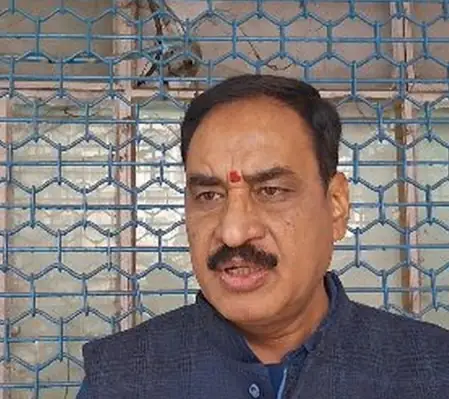
Tensions flared at New Delhi’s India AI Summit as Youth Congress protesters made headlines, only to face scathing rebuke from VHP spokesperson Vinod Bansal. He denounced the action as a clear sign of Congress’s ‘anti-India’ mentality, pressing for an unconditional apology and severe penalties under laws like the National Security Act.
Speaking candidly, Bansal argued that the protest had stripped away Congress’s facade, exposing its core hostility. He expressed outrage over leaders drawing parallels to martyr Bhagat Singh, labeling it a shameful perversion. ‘Dissent against policies is democracy, but animosity toward the country demands repercussions,’ Bansal remarked.
Bansal linked the incident to broader Congress failings, particularly on infiltration—a ‘long-standing affliction’ that has termite-like damaged India. Focusing on Bangladesh-border areas, he noted how Islamic jihadists have disrupted Assam and West Bengal’s social fabric. He slammed the reflexive backlash from what he called a ‘jihadist coalition’ and endorsed the Centre’s proactive ‘detect, delete, deport’ policy.
In parallel, Congress parliamentarian Pramod Tiwari assailed the US-India trade terms, portraying tariffs as a predatory move exploiting PM Modi’s position. Quoting Trump on using economic pressure to influence India-Pakistan military actions, Tiwari decried it as anti-national. He underscored Indian agriculture’s vulnerability—small-scale farmers versus vast American operations—warning of catastrophic consequences from unbalanced competition.
These confrontations at the AI Summit spotlight fractures in India’s political landscape, blending tech innovation with security fears, migration woes, and trade inequities in a high-stakes narrative.