
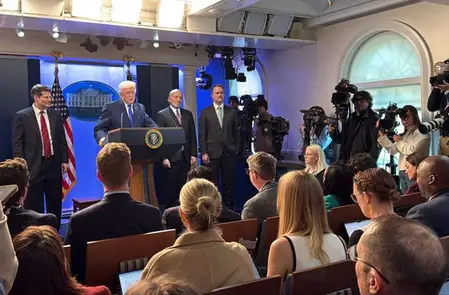
The echoes of a US Supreme Court triumph over presidential overreach reached New Delhi, where India’s Commerce and Industry Ministry vowed to scrutinize ensuing tariff twists. In a 6-3 verdict, justices nullified Donald Trump’s expansive import taxes, affirming Congress’s sole prerogative on such matters—a direct rebuke to his emergency powers invocation.
Undeterred, Trump unveiled a 10% ad valorem duty on inbound goods via Section 122, effective February 24 for 150 days. His presser framed it as essential for quelling international payment imbalances, with exemptions shielding strategic sectors: vital minerals, energy feeds, agro-inputs, pharma essentials, tech components, and vehicles.
‘Noted the US apex court’s tariff decision yesterday. Trump spoke at a press conference. Administration steps announced. Studying effects,’ declared the ministry succinctly. This development unfolds against a backdrop of US trade imbalances, where deficits fuel protectionist fires.
White House details spotlight the provision’s intent: surcharges and curbs to stabilize reserves. Parallelly, Trump greenlit Section 301 probes into trade barriers abroad. Indian industries, from pharma giants to auto parts makers, eye the carve-outs warily—many align with exempted categories, but gaps persist.
Analysts predict short-term flux: higher costs for non-exempt shipments, possible rerouting via third countries. India’s response hints at strategic patience, potentially bolstering ‘Make in India’ amid US reshoring pushes. This episode spotlights enduring US constitutional checks, even under populist leadership, as bilateral ties hang in the balance.