
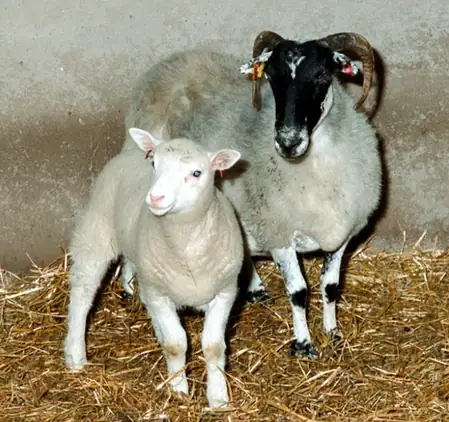
In the annals of science, few moments rival the unveiling of Dolly the sheep. On February 22, 1997, the Roslin Institute revealed their six-month-old creation: the world’s first cloned mammal from an adult cell. This wasn’t science fiction; it was a meticulously engineered reality that redefined developmental biology.
Ian Wilmut’s team pioneered SCNT by swapping nuclei. A diploid nucleus from a differentiated mammary epithelial cell replaced that of an oocyte, reprogrammed via cytoplasmic factors to express embryonic genes. The blastocyst implanted successfully in a recipient ewe yielded Dolly, confirming adult cells retain a full genomic potential.
This shattered Weismann’s barrier theory, which posited irreversible differentiation. Dolly’s viability validated nuclear equivalence, spurring fields like induced pluripotency (later Nobel-winning iPSCs by Yamanaka) and cloning in over 20 species, from mice to monkeys.
Optimism surged for therapeutics—patient-specific stem cells evading immune rejection, livestock enhanced for milk proteins like human insulin. Agriculture stood to gain from disease-resistant herds. But ethical tempests brewed: bioethicists decried commodification of life, feminists raised reproductive exploitation fears, and policymakers imposed moratoriums.
Dolly’s health saga tempered the triumph. Diagnosed with Jaagsiekte retrovirus-induced lung cancer and joint issues, she was put down young. Telomere attrition and mitochondrial DNA heteroplasmy were implicated, though her lamb Bonny lived to 9. Dolly’s stuffed remains reside in Edinburgh’s museum, a testament to innovation’s costs and cloning’s maturation into safer techniques.