
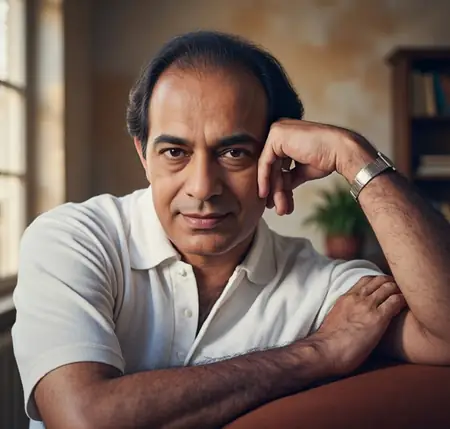
Few voices in Hindi cinema history resonate as hauntingly as Talat Mahmood’s. Entering the scene in the 1950s, this Lucknow native born in 1924 didn’t follow trends—he set them. By marrying ghazal’s poetic gravitas with Bollywood melodies, he shifted the paradigm from frothy tunes to introspective masterpieces.
Talat’s timbre, laced with a delicate oscillation, conveyed unspoken sorrows and passions. He sang not to impress, but to immerse, turning every couplet into a personal confession. This purity birthed the iconic film ghazal style.
His peak in the ’50s delivered gems like ‘Phir Wahi Shaam Wohi Gham,’ ‘Shaam-e-Gham ki Kasam,’ and ‘Jalte Hain Jiske Liye.’ Amidst loud vocal acrobatics, his understated delivery, paired with precise elocution and shayari savvy, won universal acclaim.
Music creators took note, flooding films with ghazal-based compositions that viewers adored. Talat single-handedly popularized this sophisticated sound.
Internationally, he made waves by voicing Bengali songs for a 1960 East Pakistan project—today’s Bangladesh. Language proved no hurdle; his allure was innate.
As genres evolve, Talat Mahmood’s pioneering role stands firm. His work reminds us that true artistry lies in depth over decibels, keeping film ghazals alive in collective memory.