
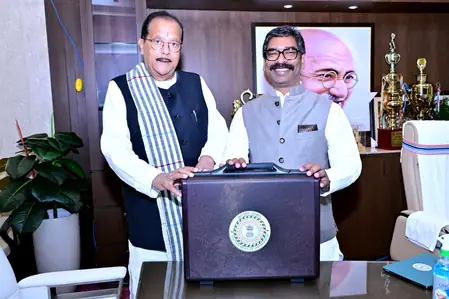
Ranchi buzzed with anticipation as Jharkhand unveiled its ₹1,58,560 crore ‘Abua Dishom Budget’ for fiscal 2026-27. Finance Minister Radhakrishna Kishore, in a detailed address, portrayed it as Chief Minister Hemant Soren’s masterplan for holistic development.
Up nine percent on last year’s figure, the budget zeroes in on the marginalized, aiming to deliver joy to every doorstep. It embodies the ‘Abua Jharkhand’ ethos, pushing welfare from farms to factories.
Kishore didn’t hold back on federal lapses: ₹16,000 crore shortfalls in shares and grants, GST losses of ₹4,000 crore annually, MGNREGA’s shifted costs at ₹5,640 crore, and unpaid coal royalties totaling ₹1.36 lakh crore.
Yet, fiscal discipline prevailed – no salary delays, ₹13,000 crore for women’s honor scheme, and revenue growth from ₹25,521 crore to a projected ₹66,700 crore.
Breakdowns reveal priorities: Women’s schemes lead with ₹14,065 crore for cash transfers, total department budget at ₹22,995 crore. Health: ₹7,990 crore, including specialized cancer care and 750 community clinics.
Agriculture fortification includes ₹145 crore seeds, ₹475 crore conservation, ₹80 crore machinery. Rural push: ₹12,346 crore, housing ₹4,100 crore, self-help groups ₹66 crore.
Education: Massive ₹16,251 crore for basics, excellence in higher ed. Revenue expenditure: ₹1,20,851 crore; capital: ₹37,708 crore (up 8.5%). Fiscal metrics stable at 2.18% deficit, 25.3% debt ratio.
As debates ensue, this budget stands as Jharkhand’s clarion call for self-reliance and shared prosperity.