
Dark energy isn’t just a scientific curiosity—it’s the dominant ingredient in our universe, making up about 70% of its energy density and fueling an acceleration no one saw coming. This phantom force challenges everything we know about cosmic evolution.
Rewind to the Big Bang: 13.8 billion years ago, the universe erupts from a pinpoint, rapidly inflating. Cooling leads to structure—protons, stars, spiral arms of galaxies. Gravity, the great unifier, was expected to curb expansion, binding matter against the outward rush.
1998 flipped the script. Independent teams tracked Type Ia supernovae, reliable beacons for distance gauging thanks to their predictable luminosity. Hubble observations showed these blasts dimmer, galaxies receding faster than predicted. Enter dark energy: a counterforce to gravity, stretching space itself.
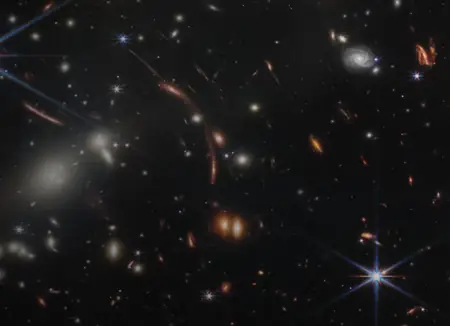
Mechanically, it exerts negative pressure, akin to repulsion amplified over vast scales. Early universe gravity slowed growth; dilution empowered dark energy. Its identity eludes us—vacuum energy? Modified gravity? Telescopes like James Webb scrutinize distant light for hints.
Implications are profound. Acceleration suggests a future of isolated galaxies in infinite darkness. Yet anomalies in data hint at evolving dark energy, potentially averting doom. With new instruments online, scientists race to decode this cosmic enigma, reshaping our understanding of existence.