
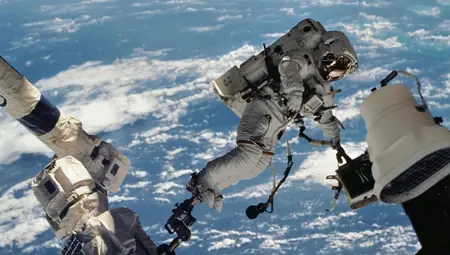
Gravity is a silent sculptor of our frame, compressing the spine daily by up to 2 cm. Sleep reverses it temporarily, but space offers permanent reprieve—astronauts emerge taller by mission’s start.
NASA reports average 3% growth in microgravity, concentrated in vertebral discs that plump up without weight’s burden. Shoulders hike up, posture shifts, complicating designs not accounted for.
Real-world proof: Kate Rubins’ 171 cm Earth stature became 174.4 cm in orbit. Gravity’s return shrank it back.
Through videos, figures like Mike Barrett and Sudhakar Rajulu from NASA’s Human Research Program demystify these transformations, emphasizing anthropometric precision.
The agency’s ‘What’s Your Space Height?’ initiative invites learners to measure post-sleep dimensions, fostering understanding of body metrics in extreme environments.
Anthropometrists at NASA calibrate every element—from hatch sizes to seat pans—anticipating elongation’s perks and pitfalls, like easier high reaches but riskier low ones.
Crew members anchor via foot loops; modular spacecraft elements flex for varying heights. This blend of biology and engineering safeguards long-duration spaceflight.