
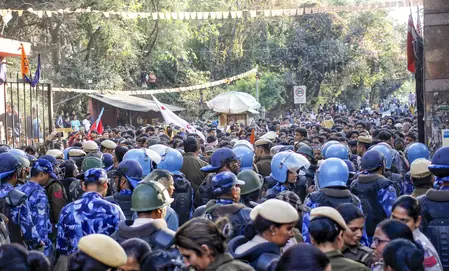
Breaking news from Delhi: Patiala House Court has set free all 14 students implicated in the JNU protest fiasco, granting them bail after deeming them non-habitual criminals. The Friday order marks a turning point in the high-profile case.
Police mounted a robust opposition, seeking extended custody for thorough probing. They argued the demonstration devolved into outright violence, with protesters clashing fiercely against officers—some sustaining injuries. Citing four earlier FIRs, authorities flagged a pattern of resorting to brute force in agitations.
Courtroom drama peaked with a female protester’s vivid allegation: plainclothes assailants yanked her from the throng, inflicting wounds that led to blood clots on her hand. Such revelations exposed the protest’s darker facets.
The defence team shone, pledging complete probe assistance and court assurances in writing. They humanized the accused as earnest students caught in activism’s heat.
Pronouncing judgement, the court condemned violence against police as grave, unworthy of protest cover. Noting five-year max sentences in the FIR sections, and absent professional criminality, it ordered release on 25,000-rupee bonds. As students walk free, the verdict prompts reflection on balancing free speech with law enforcement in turbulent times.