
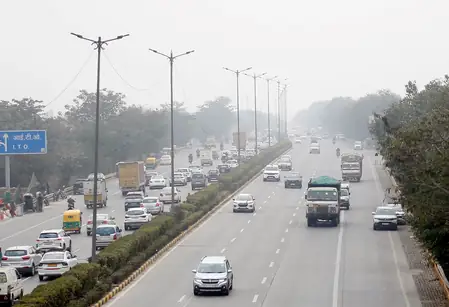
Bracing winds have delivered a timely boost to NCR’s beleaguered air quality, elevating over 80% of areas to the yellow ‘moderate’ category as of February 27. From Delhi’s bustling hubs to Noida’s planned sectors and Ghaziabad’s outskirts, AQI readings confirm the positive change after prolonged toxic exposure.
Station-specific insights reveal the extent: Ghaziabad’s Indirapuram at 202, Loni’s higher 247, Sanjay Nagar’s 167, Vasundhara’s 192. Delhi offers mixed but improved scores—Alipur 196, Anand Vihar 284 (an outlier), Ashok Vihar 192, Aya Nagar 163, Bawana 213, Burari Crossing 178, Chandni Chowk 203, and lower figures like DTU’s 145.
Noida’s respite is evident too: Sector-62 (146), Sector-1 (139), Sector-116 (151), all comfortably moderate. This shift eases daily commutes and outdoor life, though vulnerable groups still face risks.
Weather outlook remains favorable—no drastic changes through March 1, temperatures peaking at 31°C and dipping to 15-16°C, with light mist in AM hours.
Pollution watchers note winds as the key dispersant for trapped smog. Sustainability hinges on persistent airflow; meanwhile, public health advisories stress N95 masks, ventilation, and monitoring apps to navigate any rebound in particulate matter.