
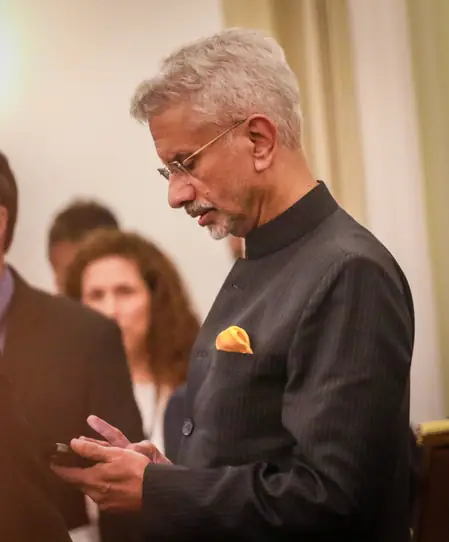
Saturday marked a critical moment in India’s foreign policy playbook as Foreign Minister S. Jaishankar dialed up his Iranian and Israeli counterparts amid skyrocketing hostilities in the Middle East. Voicing India’s intense apprehension, he implored both nations to dial back the aggression following a flurry of missile strikes.
The flashpoint: Coordinated US-Israel assaults on Iranian military hubs—hailed as pre-emptive by Jerusalem and ‘Operation Epic Fury’ by Washington—drew swift Iranian reprisals targeting Israel and US installations in the Gulf. Tensions have hit fever pitch, evoking specters of all-out war.
Jaishankar’s chat with Iranian FM Seyed Abbas Araghchi highlighted shared anxieties over unfolding events and the critical need to stem instability. He echoed similar sentiments to Israeli FM Gideon Sa’ar, insisting dialogue trumps confrontation.
The MEA’s communiqué affirmed India’s vigilant oversight, urging de-escalation, sovereignty respect, and calm. Trump endorsed the strikes with regime change rhetoric, countered by Iran’s threats of retaliation.
With humanitarian risks mounting, international calls for caution grow louder. India’s engagement exemplifies its nuanced approach—nurturing ties with both adversaries while championing stability essential for its economic stakes.
In this high-stakes chess game, Jaishankar’s outreach signals India’s intent to broker calm, leveraging its unique position to avert disaster in a region vital to global security.