
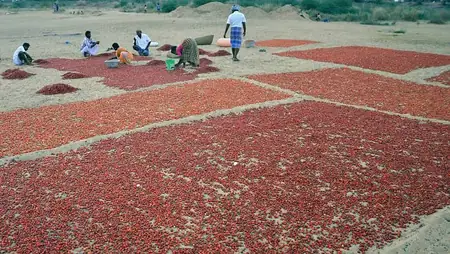
Sky-high chili prices are making headlines in Tamil Nadu’s Ramanathapuram, where Mundu and Samba types are fetching more than 20,000 rupees per quintal amid severe supply shortages. This isn’t a windfall for all—it’s a distress signal from battered farmlands.
Key factors include reduced acreage, pest invasions, fungal threats, and unrelenting dry spells. Farmers have cultivated just 13,500 hectares this season, down over 1,500 from last year, thanks to prior disease outbreaks that hammered productivity.
Harvest markets are sparse, pushing prices to double digits. Exporter M. Ramar highlights Mundu at 25,000-36,000 rupees per quintal (from 13,000-20,000) and Samba at 20,000-25,000 (from 12,000-15,000). Regulated rates stand at 360 rupees/kg for Mundu and 220 for Samba.
Initial surveys by horticulture officials indicate pests affected 2,500+ hectares, with drought sealing the fate of many fields. Farmer Ayyappan laments, ‘Irrigation saved a few; tankers helped some. Most of us are left with ruins.’
The district’s chili dominance is at risk, prompting urgent pleas for state intervention: drought compensation, pest control subsidies, and irrigation upgrades. This episode highlights climate challenges in spice production, with ripple effects on national markets and export revenues.
Looking ahead, resilient farming practices and policy support could mitigate future shocks, ensuring Ramanathapuram’s chili legacy endures.