
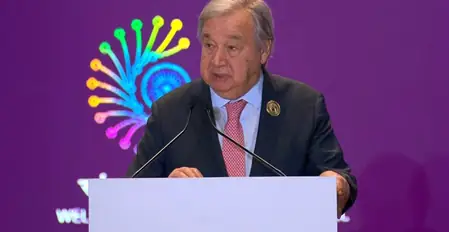
The United Nations is sounding the alarm as Secretary-General Antonio Guterres briefs the Security Council on the volatile Middle East, predicting catastrophic fallout from ongoing U.S.-Israel strikes on Iran and Iran’s Gulf reprisals, backed vocally by Russia. Civilians hang in the balance as superpowers trade barbs.
During the urgent Saturday briefing in New York, Guterres painted a grim picture: ‘Such military moves in our most unstable hotspot could spark an unstoppable chain reaction.’ He spotlighted failed diplomacy, mourning Geneva talks under Omani mediation and the looming Vienna nuclear talks now at risk.
Both camps faced sharp rebuke from Guterres, who pushed for immediate truce amid the chaos. U.S. Ambassador Mike Waltz framed the actions as essential for world order, pledging to neutralize Iran’s nuclear ambitions and missile threats to allies. ‘Global security demands this focused strategy against Iran’s relentless violence,’ he declared.
Iran’s Amir Saeid Iravani hit back hard, branding U.S.-Israeli bombings as war crimes on civilian zones and debunking threat narratives as political smoke screens. Iran’s atomic pursuits, he insisted, serve peaceful ends only.
Russia’s Vassily Nebenzia slammed the strikes as illegal aggression, evoking U.S. Vice President JD Vance’s Iraq critique—once called an ‘unnecessary’ war costing innocent lives, a lesson evidently ignored.
Israel’s Danny Danon pointed to Iran’s inflammatory rhetoric against the West, justifying preemption: ‘We’re nipping extremism in the bud.’ Guterres’ call for calm underscores the high stakes, as the world watches war’s shadow lengthen over the region, urging leaders to prioritize peace over pride.